Trading knowledge libraryWhat Is Profit FactorTrading Math
Trading Math
What Is Profit Factor
Profit factor is everything the winning trades made divided by everything the losing trades cost. This paper shows you the division on a list of ten real trades, the two totals stacked so their heights can be compared, why the number has no units and does not change with the size traded, and where the platform prints it.
Profit factor is one division. Add up everything the winning trades made — the gross profit — and everything the losing trades cost — the gross loss — and divide the first by the second. On the ten-day list, one lot — 100,000 euros — of the euro against the dollar bought at each day's open and sold at its close from 24 August to 4 September 2026, the winners made $918 and the losers cost $1,447. Nine hundred and eighteen over fourteen hundred and forty-seven is 0.63. A factor above one means the winners made more than the losers cost; below one, as here, the list lost money.
The two totals, stacked
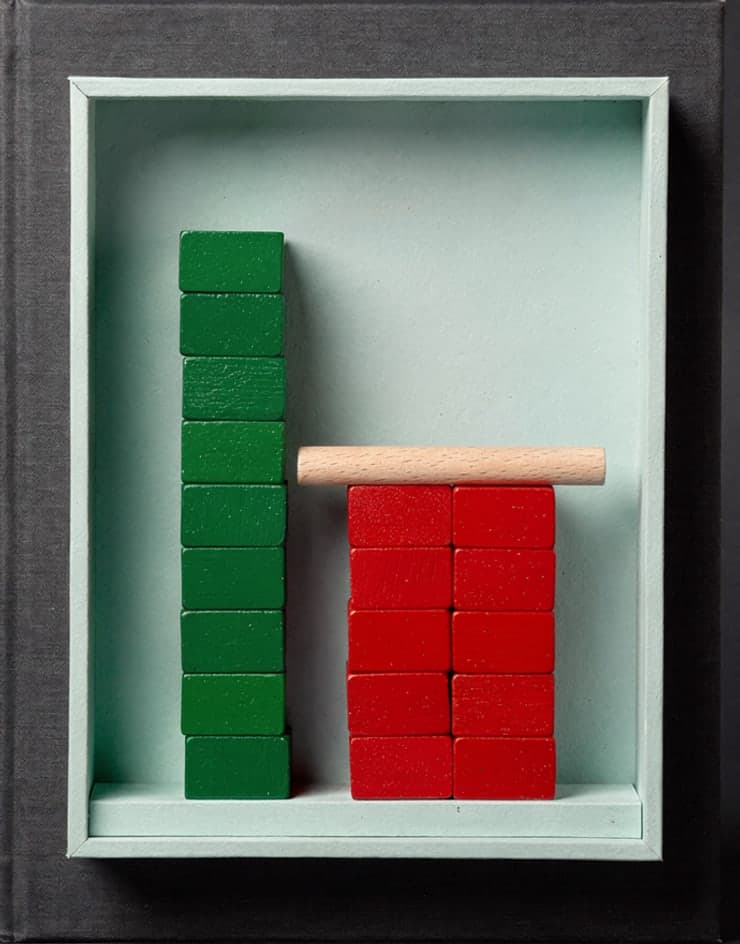
The clearest way to see the number is as two stacks, one block per trade, each block as tall as its result. The green stack has four blocks and reaches $918. The red stack has six and reaches $1,447 — and one of its blocks, 28 August at $710, is half of the stack on its own. The factor is the height of the green stack against the red: 0.63. The number of blocks plays no part; a stack of four can be taller than a stack of six, and the factor would say so.
The factor has no units, which is the thing that makes it useful. At a tenth of a lot every line on the list would be a tenth — the winners $91.80, the losers $144.70 — and the division would give the same 0.63, because the size scales both totals together. It is one total as a share of the other, whatever size the list was traded at and whatever currency the account is kept in.